
Name Your Food Noise
I've been a clinical psychologist specializing in eating disorders for over twenty years. In that time, the most consistent thing I've observed is this: people cannot begin to heal something they don't have language for.
Food noise isn't a character flaw.
It isn't weak willpower.
It isn't vanity, or sensitivity, or a reflection of poor discipline.
Food noise is a neurological pattern. A brain-based response, often rooted in biology and reinforced by culture, that creates relentless mental chatter around food and our bodies.
When we can name it, we can begin to understand it.
When we understand it, we can start to quiet it. That’s what my diagnostic tool can help you do.
→ Take the Food Noise Assessment HERE.
What I've learned over decades of clinical work is that food noise exists on a spectrum. No two people are exactly alike.
The problem is that most people don't know where they fall. They've been living with this for so long that they've lost their reference point.
The first level of food noise is a background hum you barely notice. A twinge of guilt after dessert. A moment of second-guessing in the grocery store aisle. A small, fleeting thought — should I have eaten that? — that passes almost as quickly as it arrives. Most people who experience this level assume it's just part of being human. It's uncomfortable, but it's manageable.
Life goes on.
The second kind is louder.
It follows you to the dinner table, into your workday, and into conversations you're trying to have with people you love. It's the mental math before every meal — calculating, categorizing, negotiating. It's the voice that comments on everything you eat, whether the food is "good" or "bad." People at this level often describe a constant low-grade preoccupation with food that they've simply normalized. This is just how I am, they tell themselves. But it doesn’t have to be this way.
And the third kind of food noise is deafening.
At this level, your brain has been hijacked by a voice that knows everything about you and uses it against you. It weaponizes your deepest insecurities, your history, your emotional triggers. It makes you feel like the problem is you: your choices, your willpower, your worth.
Most people experiencing this level of food noise have never had a name for what they're living with. They've spent years thinking something is wrong with them, rather than recognizing that their brain is stuck in a pattern — one that can be understood, and one that can change.
The Food Noise Diagnostic Tool
This is exactly why I created a food noise diagnostic tool.
It's designed to give you something real — not a vague wellness score, but an actual understanding of where you land on the food noise spectrum and how you can make meaningful and intentional choices to quiet it.
If you want to go deeper, there's a more comprehensive quiz available as well — a full assessment I developed as a clinical tool to help people understand the nature and severity of the noise they're carrying.
If you've been wondering whether what you experience around food is "normal,” this is for you. If you've been wondering what to do next, I hope this helps.
→ Take the Food Noise Assessment HERE.
Need More Support?
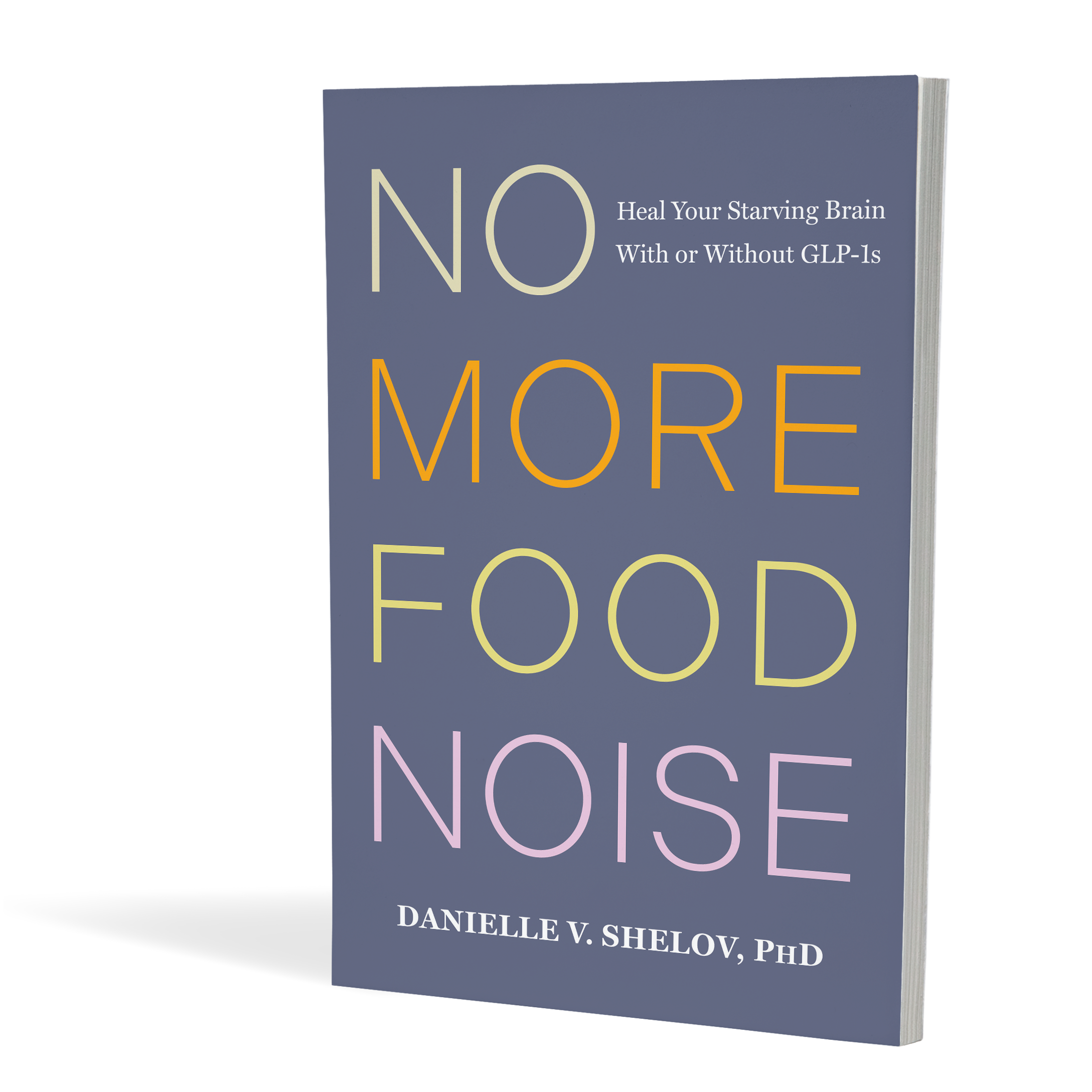
If you need more help exploring this and silencing your food noise, my book is coming out in December 2026 that will help you do exactly that. You can pre-order your copy today!

Get to KnowDr. Danielle Shelov
Dr. Shelov's therapeutic approach emphasizes understanding individuals within the context of their families, childhood experiences, relationships, and larger systems as crucial to psychological treatment.
You Might Also Like